Showing posts with label nitrates. Show all posts

Tuesday, July 19, 2016

And growing some more


Howdy

It's starting to look like a garden!
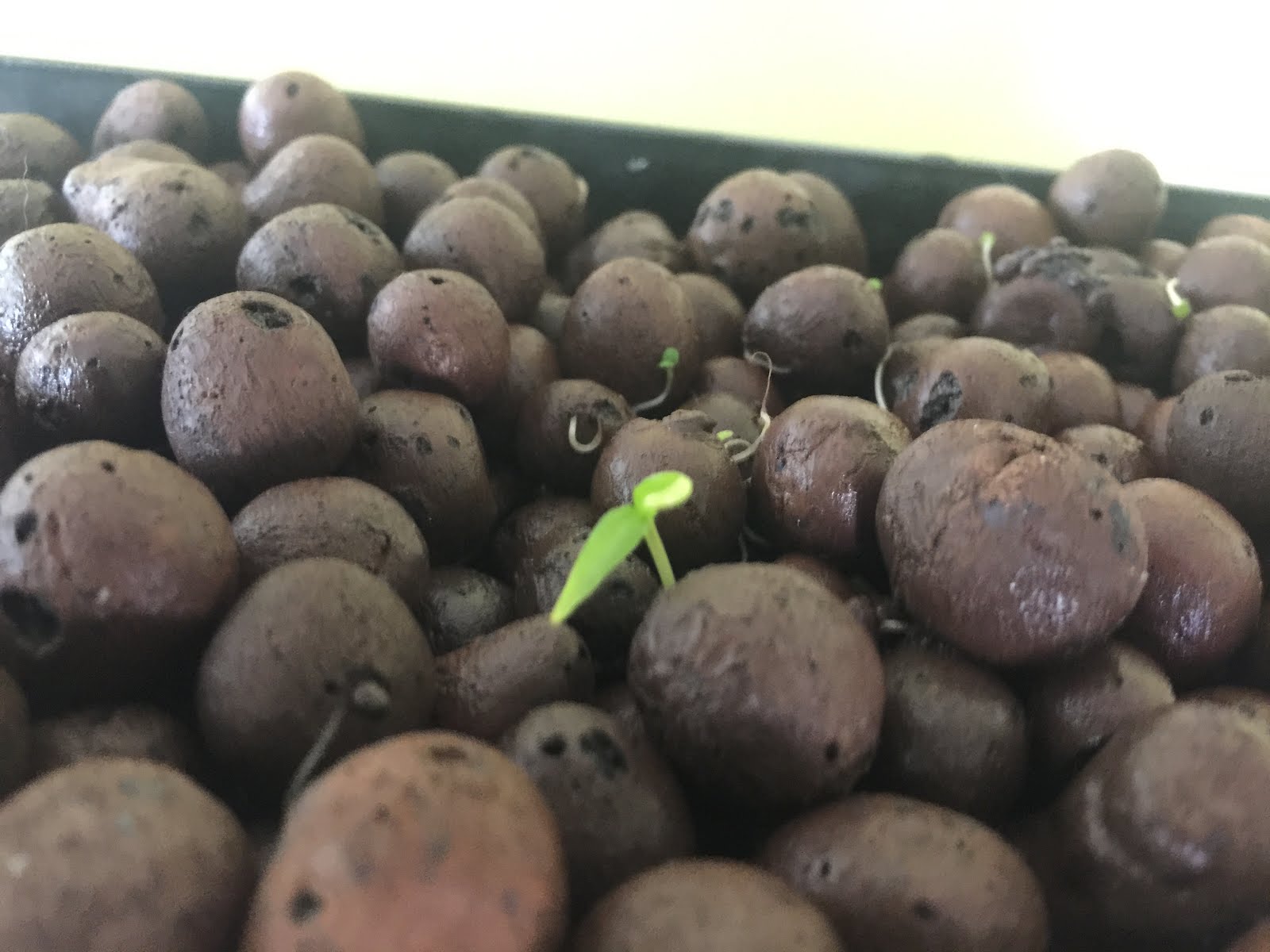
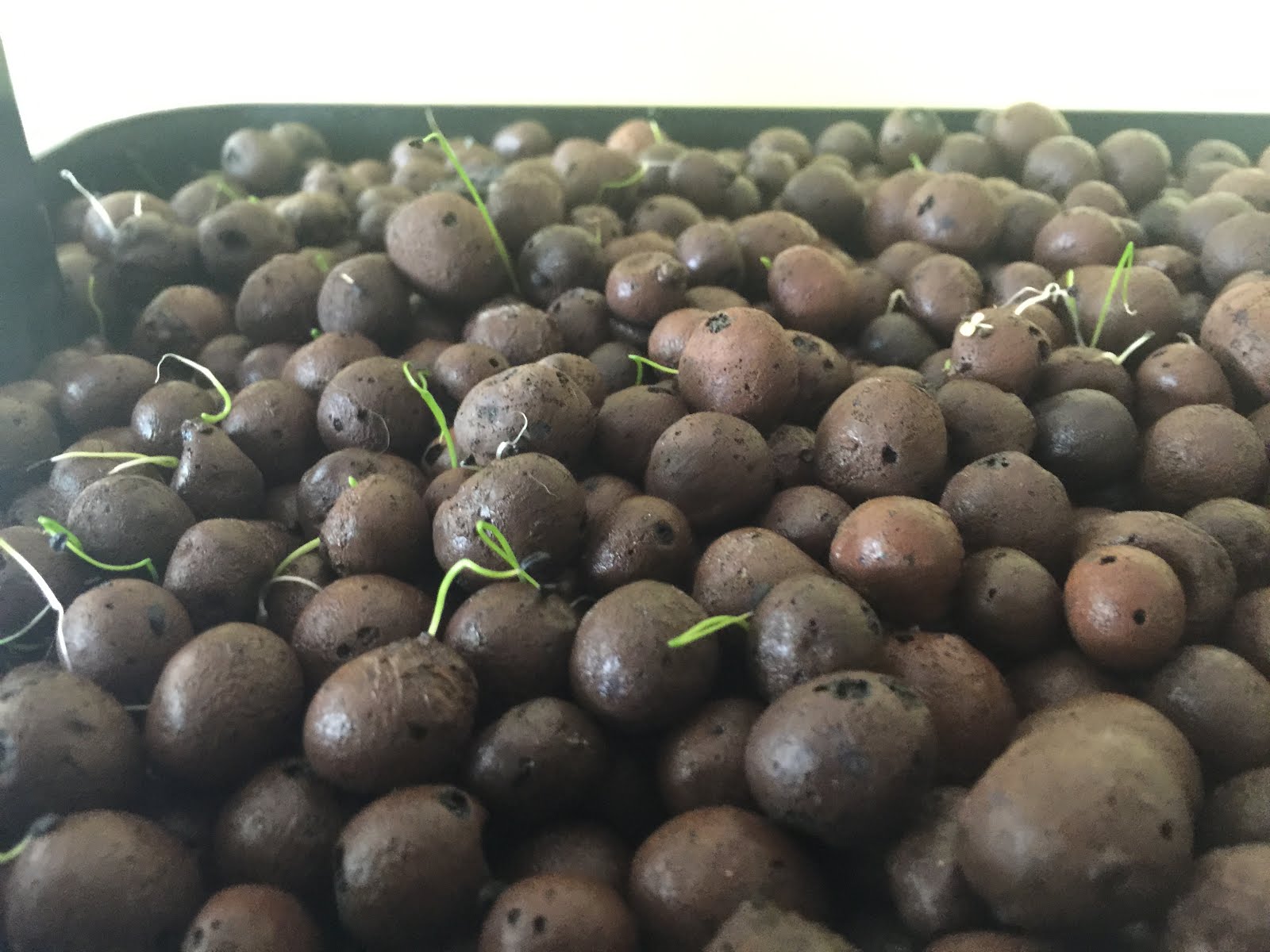
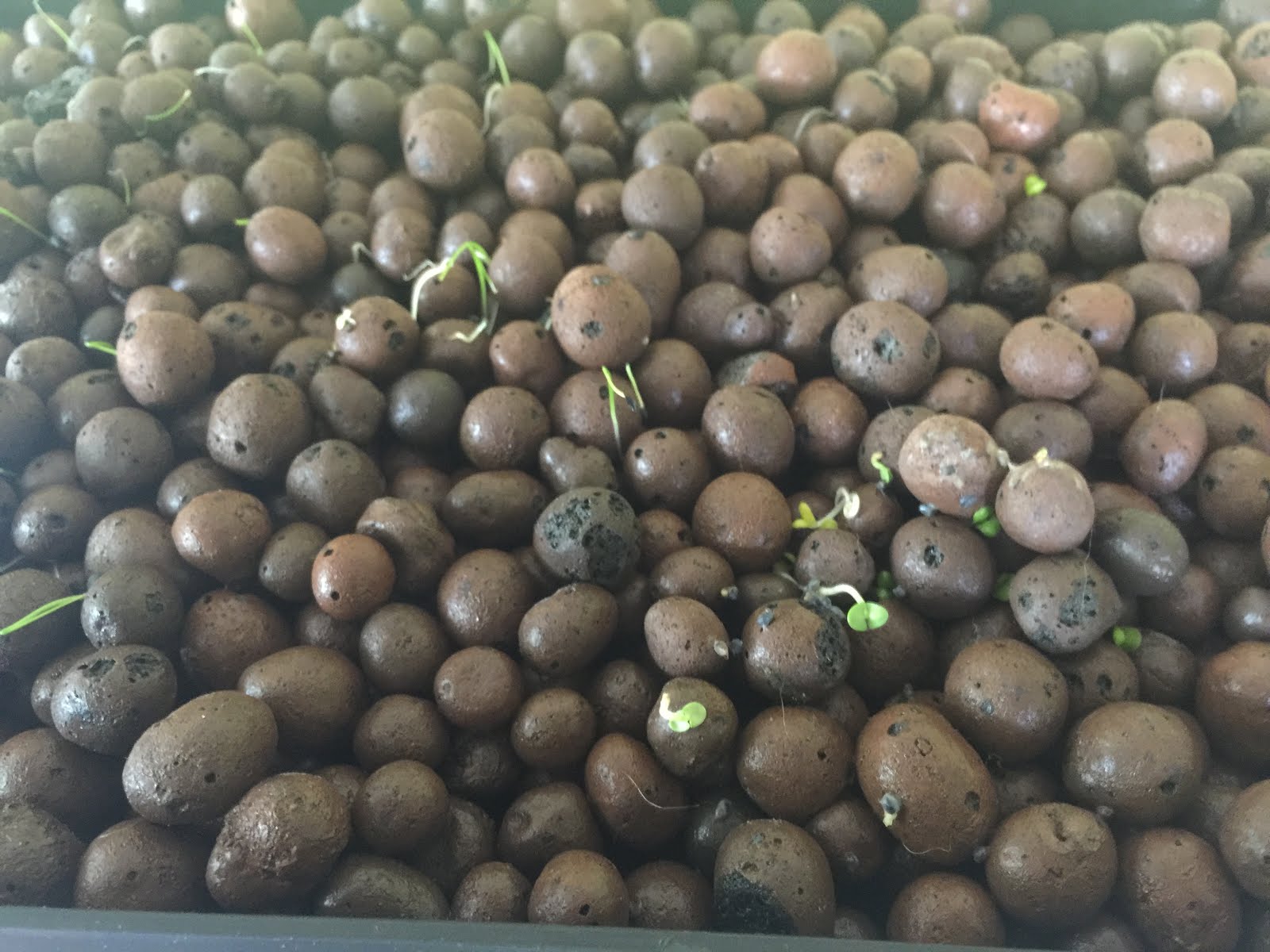
Hey folks! The tank is still going strong and I'm finally starting to see some significant growth from seeds instead of fostered plants. I was surprised at how large the Sweet Basil's leaves have become. I have to start using this in food.

As you can see, I zip-tied the aerator to the light bar's post, which allowed me to remove the makeshift shelf on the right-side of the growbed. This is why there is no growth in this area of it. Some seeds were put down, but I haven't seen progress yet.

The fish are as hungry as ever. My number checks are within spec with zero ammonia, zero nitrites, and a seemingly healthy level of nitrates that the plants are using. In order to further fill-in the growbed, and based on my previous experiments and Pinterest advice, I've been propagating some plants and reinserting them into the growbed. It'll also be a good way to manage the bed so that I don't take too much out for recipes and what not.

My growlight looks a bit wonky. It's not as symmetrical as those nice fluorescent long bulbs, but it was only $30 from Amazon, and it does the job very well; as has been demonstrated through this blog. I should buy another one and link them together. (I just did!) It would still be cheaper than the $100+ for a proper looking one that may not perform as well.

Looking back

Things have gotten much stabler as this project has progressed. If I did it all over again, I would definitely change some things, such as:
  1. Don't use a chemical, pet-store styled dechlorinator. I avoided using it early on, but since I had fish, I used it as an emergency measure in association with a water change. The fishes' lives were in danger due to a massive ammonia spike. At least at my water district, they don't use chlorides. This means that I can simply leave a bucket of tap water exposed to the sunlight for 24 hours and the water will naturally dechlorinate.
  2. Buy a growlight as soon as your tank cycles and turn it on as soon as you seed. This is imperative in order to have significant growth in an indoor tank.
  3. Locate the aquarium in a room with less outdoor light. I thought that I could get away with not having a growlight because two of the walls were mostly windows. I was wrong. Additionally, having the aquarium in such a well-lit room accelerated algae problems in the tank.
  4. Purchase an aerator after you cycle your tank and as soon as you stock your fish. The oxygen is important for the fish, particularly when the algae are competing for it.

The Numbers

I'm going to discontinue this segment as the tank has been stable for at least one month. When there are problems, I will bring it back.

Going Forward

I have a few new projects going on, such as being a potential landlord, and completing a bathroom renovation on my own home. However, I'm not concluding the blog. I'll write whenever I use its plants for recipes and for new developments. It won't be a near daily update as it once was, but it hasn't been for a time.

As always, thanks for reading.

Monday, June 6, 2016

The Consequences of Shading

Observations and Actions

  1. Water is noticeably clearer but still has a greenish tint. The algae problem must be clearing up. I've been keeping the front of the tank covered with my whiteboard during the day. I also created a roman shade for only one of the windows, which also helped with he sun as well as decrease the heat in the room. I also have been limiting the feeding to 1-2 times per day; not just when the goldfish are clamoring for a meal.
  2. My water readings are changing again. For the first time in awhile, the pH has gone below 6.5. The water hardness has gone up but the carbonate hardness has gone down. There are zero nitrites, but an increased level of nitrates. Are the plants not making use of the nitrates? The water temperature continues to be steady.
  3. The snail died. I'm guessing that it may have had to do with the change in pH.
  4. I topped off the tank with some naturally dechlorinated tap water (I left it uncovered, in a bucket, for a couple of days). I then added 40 drops of pH UP to the tank to get the numbers up. I should have added less for less of a shock. I know that the goldfish will handle it, but I'm not sure about the catfish. Both appear to be very healthy and active.
  5. The plants are not doing well. This could be due to the pH changes. The fostered plants have brown spots on the leaves and appear to be wilting. Their health was floundering before I put up the window shade, but the decreased sunlight is a factor. The fostered plants have actually pointed to the left; towards the light of the closest, eastern-facing window. I am going to have to purchase a grow light but I don't want to spend the money.

Analysis

Regarding the algae v. plant light conundrum, I'm going to have to either move the tank or buy a grow light. While the sunlight is great for the plants, it's not direct. The room shading, which helps limit the algae growth and makes the room more comfortable in the summer, limits the plants' growth. I need to bite the proverbial, financial bullet and buy a grow light. If you have any recommendations, please provide a comment in the page or send me a tweet (@the1verse).

The pH dropped to 6.0. I'm very concerned about this since I really didn't do anything to the water. I'll have to read more about why this happened, but my observations tell me that the shading is the only external change. I don't recall anything else being done.

The Numbers


Date GH
General
Hardness
KH
Carbonate
Hardness
pH NO2
Nitrites
NO3
Nitrates
NH3/NH4
Ammonia
Temp °C
6-Jun 180 40 6.0 0 160 0.00 24°

Wednesday, May 25, 2016

Water changes and anticipation


Observations

  • Fish have a voracious appetite. I continue to feed them twice per day. I hasn't appeared to effect the water readings, which are dropping in the nitrite and ammonia categories.
  • Tank water still has greenish tint. I still need to address the algae in the tank. At least for the interim, I've been covering the glass when we're not in the room; at least during the day, to minimize its growth.
  • Growth progress; particularly among the chives. The lemongrass also appears to be sprouting in the corners where I placed it.
  • The ammonia is keeping steady at 0.25 ppm while the nitrites have dropped to zero. I'm asking myself whether I should add another fish to keep the plants fed with nitrates. I may do this if the nitrates drop along with the nitrites. My other questions are:
    • What is a reasonable level of nitrites and nitrates for sustaining the current level of crop? 
    • Do some plants need more than others?
    • What effect will a grow light have upon these numbers?

Analysis

Things are stable, so there's nothing to report. I'm going to use the basil for a pizza soon. I'll let you know how it turns out. For the (obvious) record, we intend to eat the items grown in this system, but not eat the goldfish. However, it's not uncommon for such a system to harvest both fish and plants; just not goldfish. :)

I also plan to take out the lemon balm (picture far-left) from the growbed and transplant them to the front and back porches. I've become obsessed with keeping away mosquitos this season as they were friggin' annoying last year. The nasty, deadly viruses they transmit, including Zika and West Nile, are also more than enough incentive for repelling them.

I'll report back in a few days and provide some pics as well.


The Numbers

Date GH
General
Hardness
KH
Carbonate
Hardness
pH NO2
Nitrites
NO3
Nitrates
NH3/NH4
Ammonia
Temp °C
25-May 120 40 7.0 0 80 0.25 24°

Monday, May 16, 2016

The show so far

Observations

  1. Water is still cloudy.
  2. Fish seem to be doing okay. They have a good appetite. It seems like they may be breathing a little hard. The numbers will explain.
  3. The water test today told me that there have been some dramatic changes to it.
    1. pH dropped to around 6.5. It's critical that I get this back up to 7-7.5. I am concerned about the wild changes affecting the health of the plants and fish.
    2. The nitrites have increased and nitrates are unchanged. By itself, this is good because it tells me that I have adequate bacteria for a nitrogen cycle.
    3. The Ammonia has rocketed to 2.0 ppm! This is very bad. It needs to come down as soon as possible but without starting over and without any magic, mystery chemicals from the pet store. I'm wondering if the plants can keep up with the processing of the nitrates. The fish need better, more stable conditions.
  4. The plants seem okay as none are wilting. These plants are not grown from the growbed itself. I purchased them from the Farmer's Market and put them in there specifically for the fish as a nitrate filter.
  5. Water temperature is steady at 23°C.

Analysis

As an immediate measure to address the issues, I performed a 10% water change using water that had been sitting in an open bucket for this use. I left it exposed to dissipate the chlorine without using any tap water dechlorinator.

I also added 30 drops of pH UP (10 more than recommended).


Next Steps

  1. Add more seeds to the growbed so I actually grow plants and not just transplant the good works of others.
  2. Get the ammonia levels down. I could siphon the unused food and waste away periodically and add more plants to use the nitrates and thus, help keep the water cleaner for the fish.
  3. I need to purchase an aerator. I saw one online that will also help keep the submersion pump quieter, but I can't find it now. I'll dig deeper. I didn't just imagine it.
  4. Sprucing up the tank and adding lights, etc. will have to wait.
  5. Buy some seeds, soak them for a day or so, and then add them to the grow bed.
  6. I will perform another ammonia test later this afternoon to see if more action is needed to reduce it.

The Numbers


Date GH KH pH NO2 NO3 NH3/NH4 Temp °C
16-May 180 80 6.5 3 80 2.0 23°


Saturday, May 14, 2016

The Venn diagram of simile, metaphor and reality

Observation & Action

So, I bought three goldfish yesterday for Fish Day after having whopping two days of acceptable numbers. To recount today's events, I'm going to write this entry a little differently than the others.  Here we go!

The water and fish before the changes
Morning Observations & Reaction

  1. Cloudy water
  2. Two outer drains were clogged with grow media; unclogged them and removed a riser on each, which would have the effect of lowering the water level in the growbed.
  3. Opened the flow of the submersible tank to 100%.
  4. Added the rest of the pepper seeds to the growbed.
  5. The fish do swim, but not a lot. The conditions may not be ideal for them as of yet. I fed the fish this yesterday and this morning. They mainly hang out towards the bottom of the tank.
  6. I siphoned some of the extra food from the tank that the fish didn't eat in order to forestall a rise in ammonia through food decay.
  7. Since I really don't have any plants to use the nitrates since the seeds withered (probably due to the drastic pH changes, I am going to make a trip to the Farmer's Market and buy some plants to pre-stock the growbed. It will be important in order to keep the water clean for the fish.
  8. I also plan to place some of the lemongrass seeds into one of the corners of the growbed. I'm going to at least propagate them here, so that I can put them into a pot later on. I understand that they help repel mosquitos. That will be helpful for the backyard.

The Morning Numbers


Date GH KH pH NO2 NO3 NH3/NH4 Temp °C
14-May (morning) 180 80 7.0 1.0 0.5 0.5 24°

This Afternoon's Events

I had a great time at the Covington Farmer's Market for the short time that I was there. It was especially cold and damp this morning with temperatures in the low to mid 50's (10-13°C), which was quite a shift from yesterday when it was in the 70's (21-23°C). I bought some spearmint, parsley and rosemary plants from one of the vendors. She certainly knew her plants well. I'll update this later with her card info. I also bought a lavender plant and a banana tree from a different vendor (not for aquaponics purposes). I will definitely come back to the Market next week.

So, I arrived back home, took care of the dogs, and then commenced see how I can stock these plants into the growbed. I thought the way to do this would be simple and have no negative consequences. Unfortunately, doing so met with some problems.

I started the rehoming process with the rosemary plant by bumping the bottom of its thin, plastic propagation pot, and then breaking apart the soil so that its roots were exposed. From there, I ran water over them while lightly massaging the roots in order to remove any soil. The next step was to put them into the growbed. Well, I either didn't do this thoroughly enough, or there was some debris from the growbed that make its way into the tank and further clouded up the water.
My soil-grown plants and fishes' new oxygen dealer

As a result, I freaked out. I was thinking that I was going to kill these poor fish after I took them away from their relatively posh lives at Planet Pet (a pet store across the Licking River in Newport, KY). Since I needed to get plants setup anyway, I continued the task of breaking my purchases free from their soil and into aquaponic system's substrate. I needed to find a way to clear up this water, but without starting over.

It's really a little bit of a pain in the ass to actually put existing plants in there, along with their long root structure, into the bed. It was even more difficult when changing the drain risers. As you may have deducted, the thing with collections of round items in a bowl, is that as soon as you dig a little hole, all of their little friends want to fill-in the gap.

Fortunately, I found a 5" (127mm) length of 3" (76mm) PVC pipe to help me solve the problem. Placing the pipe down into the substrate, and then digging out the balls, I was able to place the plant at the desired depth, put the balls back, and then lift the PVC back out of the substrate.

I came up with the solution when thinking about how they built the Hoover Dam. Before they could begin construction on it, they had to create a dry space tin which to work. To do so, they had to divert the entire Colorado River around the project, creating a dry bowl, until it was complete. Anyway, it worked for me.

Afternoon reaction

To summarize, I performed a 30% water change. Because I considered this an emergency situation, I used an eye dropper to administer a small, but appropriate dose of the Top Fin Tap Water Dechlorinator I had previously referenced. I probably diluted the ammonia and the bacteria population, but I wanted to clear the water so the fish could breath.

Currently, the water is very cloudy with low visibility. My most recent ammonia test, performed just a few hours ago, yielded 0.25 ppm, which is the lowest figure yet for the tank. I'm guessing that the murkiness is affecting the oxygen levels. The fish seem to be taking it in stride. They still want to eat and I have fed them. They change from hanging out at the bottom, but also hang out towards the top occasionally. During the Quarter (of the hour) Pump, they do swim and explore more than when it's off.

Afternoon Numbers


Date GH KH pH NO2 NO3 NH3/NH4 Temp °C
14-May (afternoon) 180 80 6.5 0.5 40 0.25 24°

Final Tasks

I had applied 21 drops of pH UP to the tank a few hours ago, but upon getting the latest pH figure, I added 20 more drops to it for a total of 41 drops (double the recommendation). I can't risk such a sharp drop in pH for both the fish and the plants' sake. The drop is most likely the result of the water change, so the fish, at least, are quite used to the 7-7.5 conditions. In my view, the extra is not a drastic action, but one needed to maintain the status quo.

My next tasks to work out are:
  1. Determine how much to feed the fish that will keep the tank balanced while not starving them to death. They seem to like it better if a pulverize the food before dropping it into the tank.
  2. Track the progress of the plants.
  3. Put the lemongrass seeds in as I previously mentioned.
  4. Find a way to further clear up the water in a safe way that keeps the system balanced.

Hopefully, I'll have a better report tomorrow. Thanks for reading.

Thursday, May 12, 2016

"You're killin' me, Nitrosomonas!", said Ammonia

Observations


  1. The GH number has restored to baseline, and KH remains at baseline.
  2. pH went up to 7.5 from 7.0
  3. Nitrites and Nitrates increased!
  4. Ammonia went down to 0.5 from 1.0 ppm.
  5. The plants are still not doing well. If I don't kill them through this process, I may have to reseed.

Analysis

I have to say that I'm happy with these numbers after being very concerned yesterday. I'm excited because it means that I'm on my way to introducing fish to the system. I'm hoping the number trends continue as the nitrosomonas eat the ammonia, which poop the nitrites, which are eaten by the nitrospira, which poop the nitrates, which are fed to the plants as a source of nitrogen and in turn clean the water and return it to the tank. Yes, poop is a technical term in the Nitrogen Cycle. :-) [please correct if wrong; I want to get it right]

As an aside, I previously read that nitrobacter were responsible for the nitrite to nitrate conversion, but I've since read that it's actually the nitrospira which perform this process; at least in the marine realm. There is actually a nice FAQ about cycling on The Aquaponics Source site that I just discovered. Its advice mirrors some of my own discovery.

Coming back to discussion of my system, my plants are not doing well. I understand that in order to get a balanced system, there's going to be a disruption first. My initial goal is to have water that will support the fish, so the plants will have to suffer until this is accomplished. Perhaps I should not have added the seeds right away, but I couldn't resist. I thought that it would be a good way to get the system online. I don't regret the decision though. The aforementioned FAQ actually recommends adding plants/seeds as soon as possible, so I guess that I was right in doing so.

Regarding the plants' health, I'm assuming that the change in the pH coincided with the health of the plants. I think there's still something to the theory I floated in a previous blog entry, but I'm not sure whether it's relevant to this situation.

In all, it's a bit of a breakthrough day for me and the system. The FAQ mentioned that I would be ready for fish if the ammonia and nitrite levels are at 0.5 ppm or lower. I'm now at the high end for both, but if the levels are okay, and if things don't change too much tomorrow, I'm going to buy some fish!

The Numbers


Date GH KH pH NO2 NO3 NH3/NH4 Temp °C
12-May 180 80 7.5 20 40 0.5 23°

The Nitrites Cometh!

Monday, May 9, 2016

Removing chloramines safely

The Issue

Earlier today, I expressed concern about the safety of the Tap Water Dechlorinator product that I was using to clear the chlorine and chloramines from the tap water that I put into my system. See the earlier post for details. To summarize, my main concern were:
  1. Is the product disrupting the cycling for aquaponics purposes? My tank has no nitrites but does have a level of nitrates. Is there something preventing those ammonia-eating bacteria from being formed?
  2. Is it safe to add such a product the water of a system from which we will eventually eat the plants?
  3. Is the product actually contributing to a spike in ammonia?
  4. What the hell is in this product? I can't find a site that has MSDS or any other clue as to what is in it?

Analysis and possible solution

After picking the algorithm of my personal librarian (Google), I discovered a couple of tidbits, such as:
  1. Most dechlorinator products are comprised of Sodium Thiosulfate (ST) and/or EDTA. The Sodium Thiosulfate handles the chlorine and chloramine , while the EDTA handles any heavy metals.
  2. I also read in a forum that the dechlorinator detoxifies nitrites and nitrates? There was no reference for this. I'm not sure if this point is relevant as long as these detoxified items do their part in the Nitrogen Cycle.
  3. A forum posting recounted the bad taste of fish in his system while he was using Sodium Thiosulfate as a dechlorinating agent. He mentioned that his fish tasted like sulfur. He stopped using it and it was highly reduced. I'm assuming that he replaced the fish and the water beforehand, but I'll try to find the link to prevent the spreading of bad information.
  4. The reaction of Sodium Thiosulfate winds up leaving ammonia after it does its job. This may explain one aspect of my water readings.
  5. I also read that there are rising concerns about the health effects of ST on humans and fish. However, there was no reference to any actual studies or articles about those concerns or what they comprised.
  6. Vitamin C appears to be the most natural source for removing chloromines from tap water. However, what is actually needed depends on how your municipal tap water is treated, as explained in the video below. Thanks, PhillyAquaponics!

So, will this will help solve the problem and lead to a healthier system? Do I have to perform a series of small water changes to reduce the effects of the dechlorinator product? Only time will tell.

Little change

The Numbers


Date GH KH pH NO2 NO3 NH3/NH4 Temp °C
9-May 180 120 7.0 0 20 1.0 24°

Observations

  • pH back to 7.0
  • KH back up but higher than baseline
  • Ammonia same as yesterday.
  • Nitrites and nitrates unchanged

Analysis

Thus far, the nitrates and nitrites have been pretty steady. I'm thinking that there are no nitrites to eat the bacteria and plants are not plentiful enough in the growbed to use all of the nitrates. I'm hoping that the better pH will help foster the creation of the Nitrosomonas needed for nitrite generation.

I have not applied pH UP to the tank today. Since it's so late in the day, I will will let it ride and check readings tomorrow.

A curious part of my analysis today, is that I tested my tap water for ammonia, but it turned out to be zero ppm (none). The other day, when I added dechlorinated water to the tank, my ammonia spiked the next day. I used Top Fin Water Dechlorinator to perform the conversion. The concerns are as follows:

  1. Is this product adding and/or converting chemicals in the water to ammonia?
  2. If this product is introducing ammonia into my system, will this product actually be detrimental in the long term; when fish are added to the tank. Since it's an aquaponics system, I really should not have to perform any water changes, but I will have to add water when enough of it has evaporated or used by the plants.
  3. I'm actually concerned about what is actually in this product. Is it going to be safe to use going forward? Top Fin doesn't appear to have a site to find this information.

Today's Chuckle

Found on Yahoo! Answers

How do I teach my fish to breathe outside the water?

He goes nuts when I take him out of his water. I don't underatand why he hates outside so much.

Saturday, May 7, 2016

pH UP: Day #2


The Numbers

Date GH KH pH NO2 NO3 NH3/NH4 Temp °C
7-May 180 80 7.0 0 20 0.5 24°

Observations

  • There continues to be a light foam wherever any object emerges from the water in the tank. This includes the growbed's intake hose, and tank perimeter. I thought it had dissipated, but it hasn't. However, it hasn't increased either.
  • Last night, I noticed the plants were wilting. The temperature of the tank and the room was fine. This morning, they're fine. The chives seem to be doing better as well.
  • The KH (carbonate hardness) spike from yesterday has returned to a normal level.
  • Other than the KH change and the tank temperature readings increasing by one degree, other values are unchanged.

Analysis

I don't have any insights other than that I have to give the tank more time for the desired changes to occur. In the interests of getting the beneficial bacteria to start working on the ammonia, I am going to put in another round of pH UP solution. I will do this daily until I either get a pH of 7.5 or I start seeing a spike in nitrites. We'll see what happens tomorrow.

Friday, May 6, 2016

Monitoring recent changes

Numbers


Date GH KH pH NO2 NO3 NH3/NH4 Temp °C
6-May 180 120 7.0 0 20 0.5 23°

Observations

Based on yesterday's analysis and changes:
  1. Addition of the 50-watt tank heater was effective in keeping a consistent temperature.
  2. I accidentally left the pump on all night instead of using the timer.
  3. More growth was noticed among the plants with the exception of the chive. Since the cool air and water temperatures the other night, it appears that they haven't fully recovered yet. They may not ever recover, but we'll see. When I sniff closely to the grow bed, around 3-6 inches away, I can smell the vegetation and it smells great!
  4. There seems to be a very light foam around the edges of the tank where the water surface meets the tank and around the intake hose. I'm a little concerned that I could have introduced a source of contamination. I'm hoping it's just due to the addition of the pH UP product. It could also be from bullet point #2. Update: Since storing the pump to a schedule, the foam has vanished.
  5. There was a large spike in Carbonate Hardness (KH). This is most likely due to the minerals in the pH UP product.
  6. The pH has been raised to 7.0.
  7. Ammonia, nitrates and nitrites remain unchanged.

Thoughts

I'm going to introduce another round of the pH UP to the water (2 drops per gallon). Since the common effectiveness range for the desirable bacteria is around 7.3 pH, I want to achieve this level in keeping with my goal in kick-starting the cycling process.

I will not do anything else to the tank. I'll continue with another reading tomorrow and act accordingly. I will most likely just let it ride over the weekend unless something comes up that needs immediate attention.

Photos

I believe this is the thyme
The weakened chive
Cilantro and basil
Pepper?

Thursday, May 5, 2016

Configuration changes


Earlier today, I recounted the cycling challenges that I was facing. In response, I made some changes to the tank configuration.

Changes

  1. Replaced the 25 watt aquarium heater, which was meant for up to 6.6 gallons, to a 50 watt version with an adjustable thermostat. Because of the varying levels of the water, I had to mount it horizontally in order to keep it fully submerged. I really wanted to avoid buying one this close to warmer weather, but who knows how the weather is going to perform over the next month. It's better not to be pound-foolish.
  2. Added an oxygen stone for help evening out the temperature.
  3. Added a little aquarium structure. Based on what I read, the calcium carbonate needs something to adhere. It also looks better. I read that fish freak out if there is nothing in the tank except for them.
  4. Added 20 drops of API pH UP to the 10-gallon tank (2 drops per gallon). I'm attempting to raise the pH of the tank to a range where the Nitrobacter will perform better. It's my hope, along with a water temperature increase, will jump-start the cycling since it's been so stagnant to me.  I will take another reading tomorrow and act accordingly. According to the original source within the aforelinked [yes, the word doesn't exist] Wikipedia entry, the two bacteria which move the nitrogen cycle along operate best in the following ranges:
    • The optimum pH range for Nitrosomonas is between 7.8-8.0.
    • The optimum pH range for Nitrobacter is between 7.3-7.5
  5. The intake hose between the submersible pump and the growbed has been shortened. It has also been moved to the rear center of the tank.
  6. As mentioned in the previous blog entry, the flow of the pump has been changed to approximately half its capacity.

Concerns

  1. Could the addition of the API pH UP product have a negative effect upon the tank?
  2. Is such a product safe for an aquaponics environment?
I will take a reading tomorrow and post my results in a new post.

Nitrites dropped again

Numbers


Date GH KH pH NO2 NO3 NH3/NH4 Temp °C
5-May-2016 180 80 6.5 0 20 0.50 19°

Observations

  • The temperature outside dropped last night. A window was left open, which resulted in a wilting crop. As the room temperature increased, they have started to recover. 
  • The water temperature of the tank also dropped to 19º C while the tank heater was struggling, and failing, to maintain a proper range. According to my thermometer, and other reading, it's two degrees below the minimum range for the basic fish I want it to hold. When water's makeup does become habitable for fish, I additionally want to insure it will be warm enough for them.
  • The nitrites dropped to zero while all other values, excepting tank temperature, remained constant.
  • I see additional growth in the other areas today in the thyme and cilantro areas.

Cycling thoughts

From what I understand, a spike in nitrites should be followed by a spike in nitrates as well as a drop in ammonia. Today's test showed no nitrites, but a constant level of nitrates and ammonia. Should I assume that a delay would exist between the drop of one and the spike of the other?

It's a little puzzling to me that the ammonia levels have not dropped; that no bacteria have developed to convert it into nitrites. I understand that the creation of bacteria for this first step should naturally appear. Perhaps I'm being too impatient?

Nitrobacteria and pH

I recently read on Wikipedia about Nitrobacteria where it thrives in water having a pH between 7.3 and 7.5. When I started the tank, it had a pH of 7.0. As it's been running over the past week or so, it reduced to 6.5. Based on a segment about the Nitrogen Cycle on Backyard Aquaponics site, I could add some calcium carbonate to the water and have some media in the tank for it to attach. If I do this, it would raise the pH, which would create better conditions for the bacteria to thrive. It's my hope that this increase would feed on the ammonia to kickstart the conversion process. The lower pH may be slowing the cycling process. How much to add without increasing it too much? I'll have to do my research.


Wednesday, May 4, 2016

Cycling continues...

Observations

  • The nitrite spike I recorded yesterday has went back to normal, but the other readings, including the pH reduction, remains constant.
  • The chives appear to be having the most active growth right now.
  • The water itself is crystal clear. It may have been this way yesterday, but I especially noticed it today.
  • The weather outside has gotten a bit colder today(54ºF(12ºC)). As a result, the tank's temperature has dropped to 20ºC and the water heater is on. I originally purchased the water heater for a five gallon tank. Although I don't recall whether it can handle ten gallons, the heater may have to be replaced.

Today's Readings (04-May-2016)


Date 5 in 1  Ammonia   Temp °C
GH KH pH NO2 NO3 NH3/NH4
4-May 180 80 6.5 0.5 20 0.50 20°C

Pics of Progress

Chive talking?
Washings from the clay?
Crystal clear

Tuesday, May 3, 2016

Nitrite spike?

I'm not too sure, but there appears to be a nitrite spike in my tank.  This is tentatively good news. The way I understand it, the nitrites will spike, followed by a spike in nitrates. This activity should also result in a reduction of ammonia, which is mandatory to create a hospitable home for the fish.

For the record, I think that the spike in nitrates on the 29th in the graph was caused by the addition of some water from my other aquarium.